
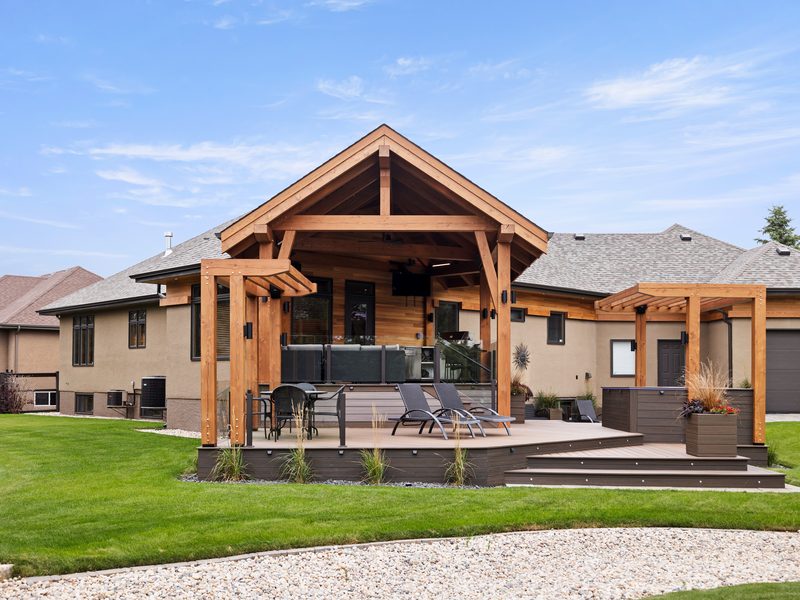
One of the most useful financing tools in Canadian real estate is also one of the least known. In a national survey, more than a third of buyers said they had no idea it existed. It is called Purchase Plus Improvements, and for the right project it lets you buy a home and fund renovations through a single mortgage, at mortgage rates rather than credit-card or line-of-credit rates.
How it works
The idea is straightforward. Instead of lending against what the home is worth today, the lender appraises its as-improved value, what it will be worth once the planned work is done, and bases the mortgage on that. The renovation funds are added to the loan, held back in trust by your lawyer, and released after the work is completed and verified. With an insured mortgage you can do this with as little as five percent down, on an owner-occupied or second home, not a rental.
Three default insurers stand behind these programs in Canada, and their caps differ. Sagen and Canada Guaranty generally allow improvements up to twenty percent of the as-improved value or forty thousand dollars, whichever is less. CMHC's program is percentage-based, up to ten percent of the as-improved value with no fixed dollar ceiling, which tends to suit pricier homes better. A handful of lenders go higher, but the rules get more involved.
Where people get tripped up
- Quotes are required up front. You need a contractor's quote for the work, submitted with the offer to purchase. The lender has to know the exact figure, and that the work will add value, before issuing the commitment.
- You pay first, then get reimbursed. The held-back funds are released after the work is done and inspected, so you carry the renovation cost in the meantime. For larger projects, lenders may want to see liquid savings on hand, often around fifteen percent of the renovation cost above a threshold.
- You pay interest on the full mortgage from day one, including the portion still sitting in trust.
- Eligible work adds permanent value. Flooring, kitchens, bathrooms, windows, heating, roofing, and structural work qualify. Appliances, furnishings, and most pure-amenity additions like pools usually do not.
- There is a clock. Smaller projects are typically expected to finish within a few months, larger ones within up to a year, depending on the lender and insurer.
Why it matters for a build
If you are buying a property with good bones that needs work, or land with an older home you intend to improve, this program can fund the upgrades as part of the purchase instead of sending you to higher-cost borrowing later. Used well, it turns a home that needs work into a sound investment from the day you take possession.
North Grid is a builder, not a lender or mortgage advisor, and program rules change. Treat this as a starting point and confirm the details with a licensed mortgage professional before relying on them.