
Every builder has a comfort zone: the kind of project they can run on familiar systems, with familiar trades, on a predictable schedule. There is nothing wrong with that. The trouble starts when a project sits outside it, because the honest answer, this one is harder than what we usually do, is not one most companies want to give. So the project gets declined, or worse, taken on by someone who underestimates it.
Complex work is where we choose to operate. It helps to be clear about what actually makes a build complex, because it is rarely just one thing.
What makes a build complex
- Site. A remote or restricted-access location, difficult terrain, a tight urban lot, or seasonal access that dictates the entire schedule.
- Structure. Timber frame joinery, long spans, unusual geometry, or engineered systems that leave no room for guesswork.
- Integration. A renovation tied into an existing building, or a scope that has to mesh cleanly with other trades and another contractor's schedule.
- Stakes. A one-of-a-kind design where there is no second chance to get a critical detail right.
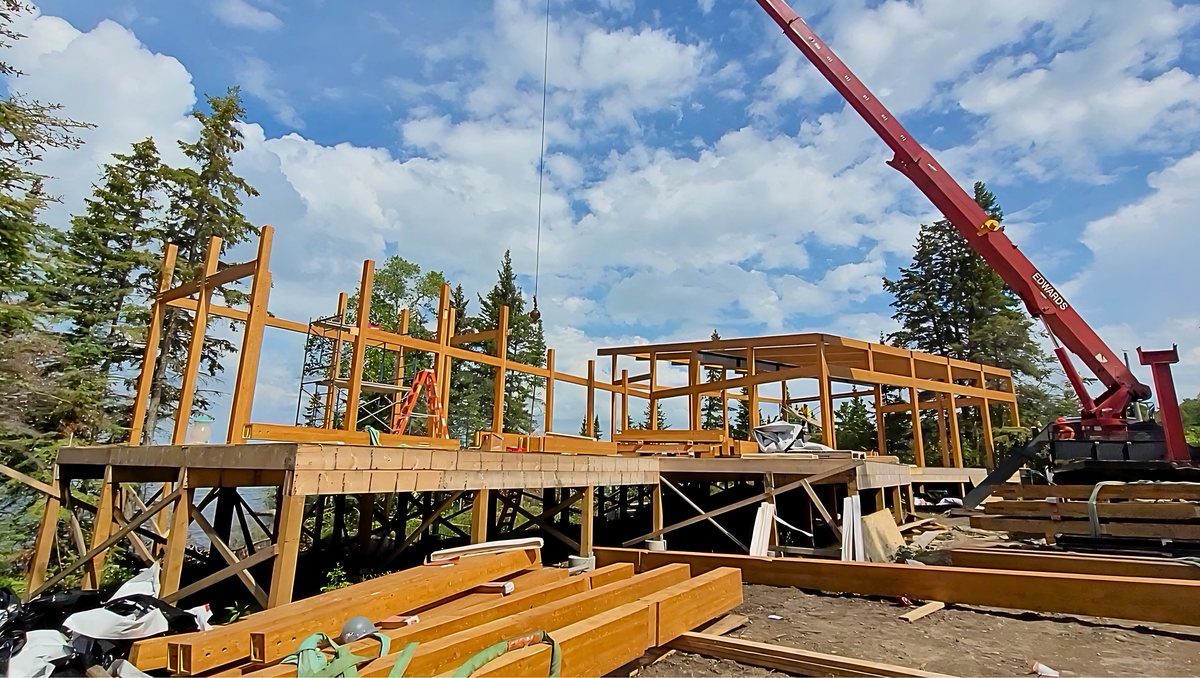
Most genuinely hard projects carry more than one of these at once. A lakeside timber-frame home reached by water carries site, structure, and stakes together. That combination is exactly what causes other builders to step back.
How complexity actually gets solved
The instinct people expect is heroics. The reality is the opposite. Complex work gets solved by moving the hard thinking to the front, before anyone breaks ground.
That means walking the site and naming the real constraints out loud. It means engineering the access and the logistics into the plan rather than discovering them along the way. It means sequencing the build around the things that cannot move, the weather window, the crane day, the delivery that has to arrive before the lake freezes, and arranging everything else around them.
It also means telling the truth early. On a complex build, something will not go to plan. The difference between a project that holds together and one that unravels is whether the problem reaches you while there is still time and room to choose a response.
Why we take them on
Partly because the work is genuinely satisfying. Mostly because someone has to, and the homeowner, developer, or contractor with a hard project deserves a builder who will look at it honestly and say how it can be done, instead of quietly hoping it goes away. Where standard will not work, that is where we do our best work.