
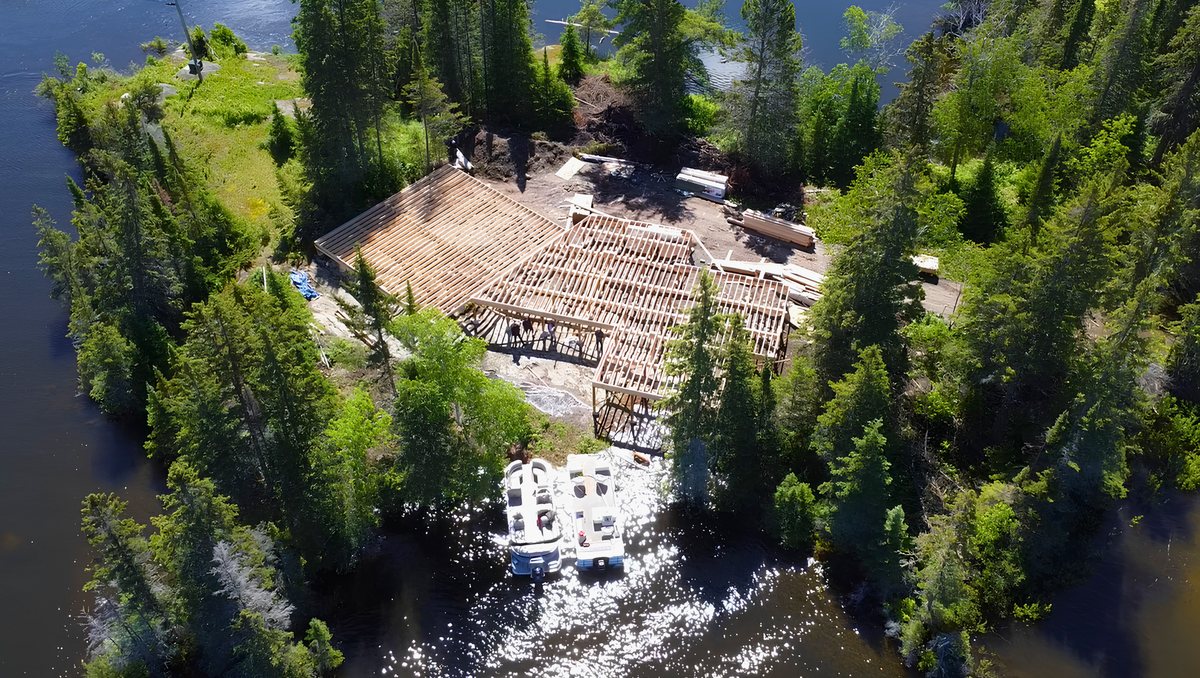
A remote site changes the order of the questions. On a typical lot, you design the home and then work out how to build it. On an island, a wilderness parcel, or a property reached by a seasonal road, you start with access, because access decides what is possible, what it costs, and when it can happen.
Access drives the schedule
Every material, every crew, and every piece of equipment has to reach the site, and the route is rarely a paved road. It might be a barge across open water, a winter road that exists only when the ground is frozen hard enough to carry weight, or a narrow track that limits the size of what can be delivered. Each of those imposes a window, and the build has to be sequenced to land inside it.
That is why a remote build is planned backwards from its constraints. If the heavy materials have to cross the ice, the structure that depends on them has to be staged for the cold months. If the crane can only reach the site by barge, the day it arrives is fixed, and everything around it is arranged to be ready.
What to plan for
- Staging. Materials often have to be ordered, delivered, and stored ahead of need, because a second trip is not a casual thing.
- Crew logistics. Travel time, and sometimes lodging on or near the site, become part of the plan and the budget.
- Equipment. What can physically reach the site shapes the methods, which is one reason panelized and timber systems suit remote work well.
- Weather. A missed seasonal window is not a delay of days. It can be a delay of a season.
- Contingency. Remote work carries less margin for error, so the margin has to be built into the plan rather than hoped for.
Why it is worth it
People build in remote places for a reason: the water, the quiet, the view no infill lot will ever offer. The site is the whole point. The job of the builder is to make the logistics disappear into a plan, so that the difficulty of reaching the place becomes a detail you stopped worrying about, and what remains is the home you came there to build.
The mistake to avoid is treating access as something to figure out once the trucks are rolling. By then the expensive decisions have already been made. On a remote site, the planning is the project.